Most home office advice falls into one of two camps. Either it is a sterile white desk with a single plant, which nobody wants to spend eight hours at, or it is so heavily styled that there is nowhere to put a laptop. The useful version sits in between: a room warm enough that you are happy to be in it, and set up well enough that your back does not hurt by four o’clock.
These eleven ideas work whether you have a dedicated room or a corner of the living room, and several of them are about ergonomics rather than decor — because a beautiful workspace you cannot sit in is not a workspace.
1. Put the desk side-on to the window
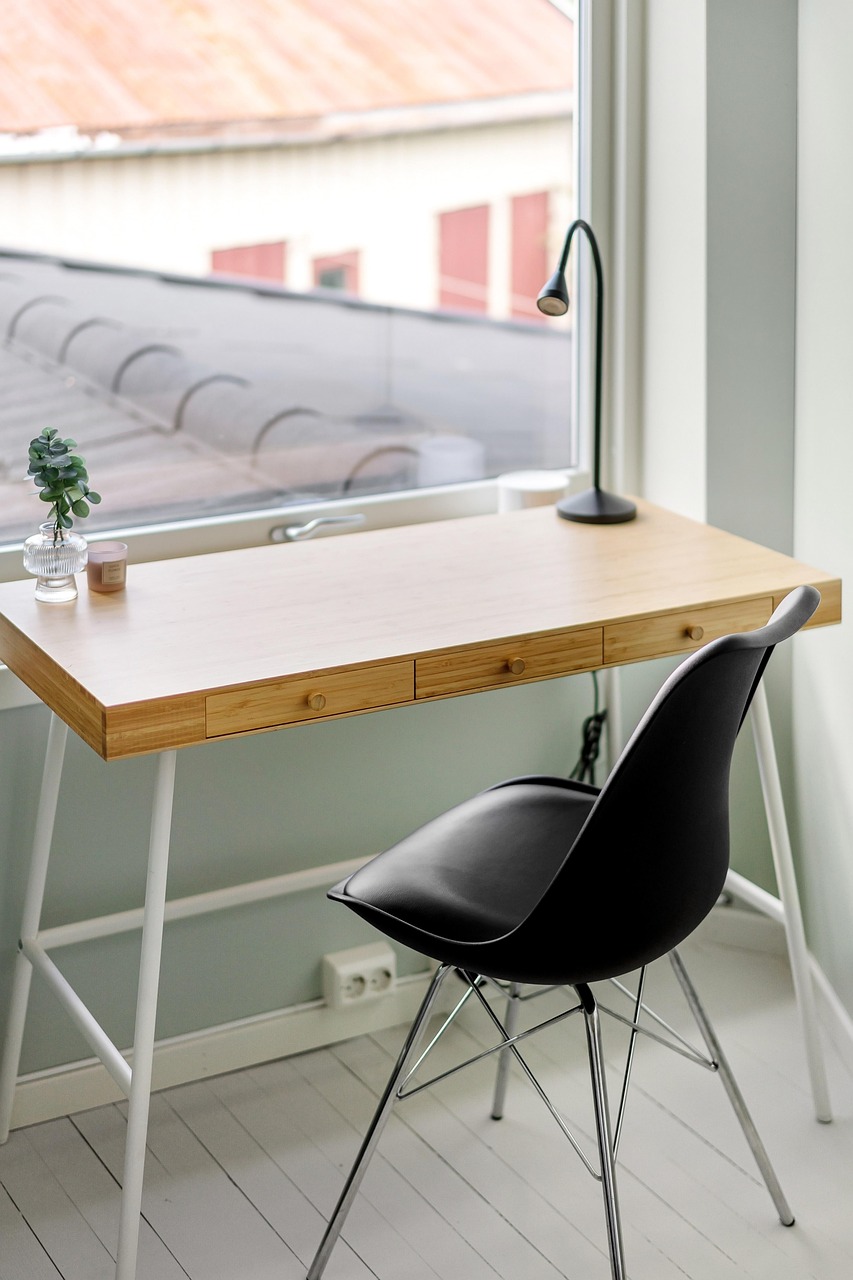
Facing a window puts glare in your eyes and behind your monitor; backing onto one puts reflections across your screen and your own shadow on your keyboard. Side-on solves both — you get all the daylight, none of the glare, and something to look at when you glance up. If the layout genuinely allows only one option, back to the window with a sheer blind is the lesser evil.
2. Get the desk and chair heights right
This is unglamorous and it matters more than everything else here combined. Aim for elbows at roughly 90 degrees with your forearms level, feet flat on the floor, and the top of your screen at about eye level. Most dining chairs are too low for most desks, so a cushion or a footrest is often the cheapest fix available. A stack of books under a laptop costs nothing and prevents a genuinely sore neck.
3. Layer three sources of light
One ceiling light gives you a flat, slightly institutional wash. Add a task lamp on the desk for detail work and something soft at a lower level — a small lamp on a shelf, or a floor lamp in the corner — and the room becomes somewhere you would choose to sit in the evening. Warm bulbs everywhere except the task lamp, which can be a little cooler for concentration.
4. Put a rug under the desk
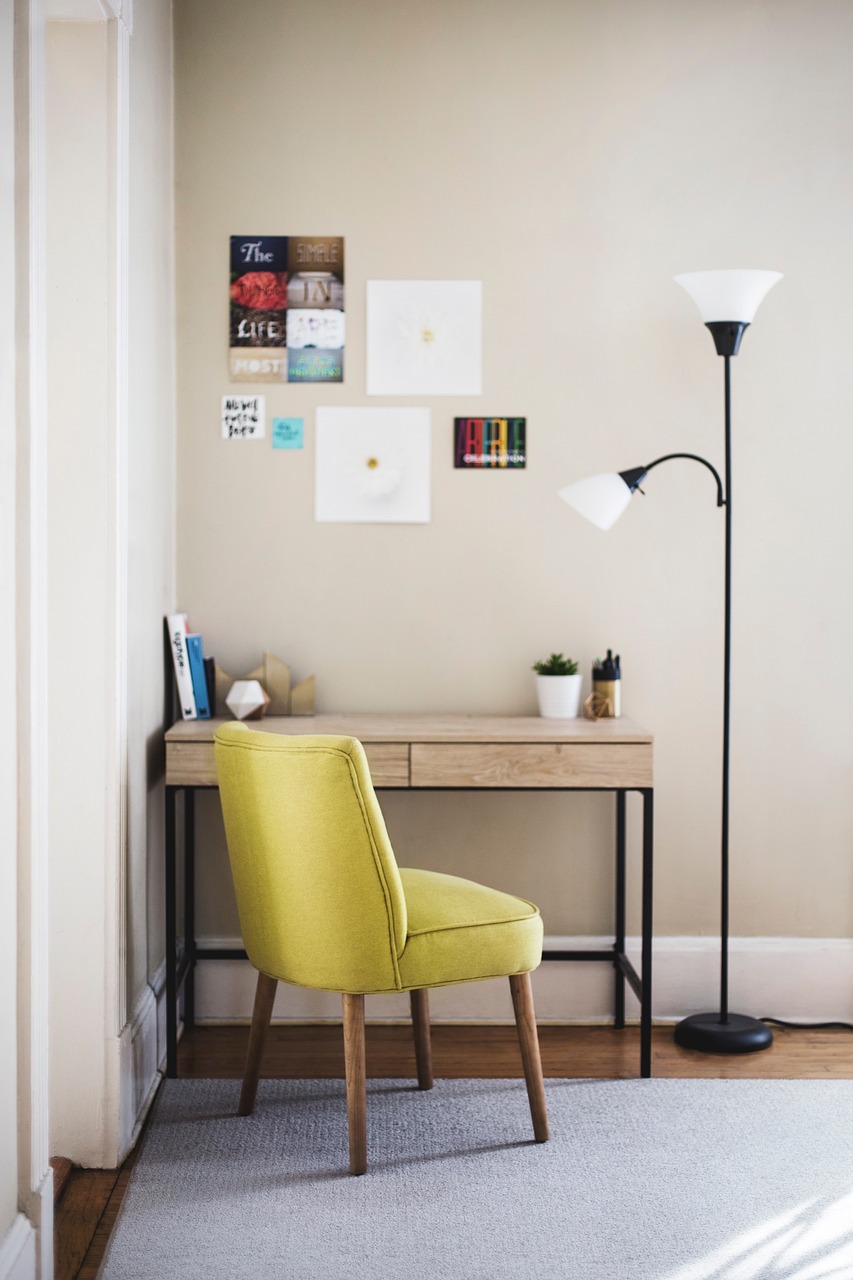
A rug does two things at once. It absorbs the hard echo that makes home offices sound like offices — which is very noticeable on video calls — and it defines the workspace as a distinct zone, which matters enormously if the desk is in a corner of another room. Make sure it is large enough that your chair stays on it when you push back, or you will spend all day catching the edge.
5. Hide the cables
Nothing undoes a carefully styled desk faster than six cables hanging down the back of it. A cable tray screwed under the desktop, a few velcro ties, and a power strip mounted out of sight will take twenty minutes and cost very little. This is the highest ratio of visual improvement to effort on the entire list.
6. Use closed storage for the ugly necessities
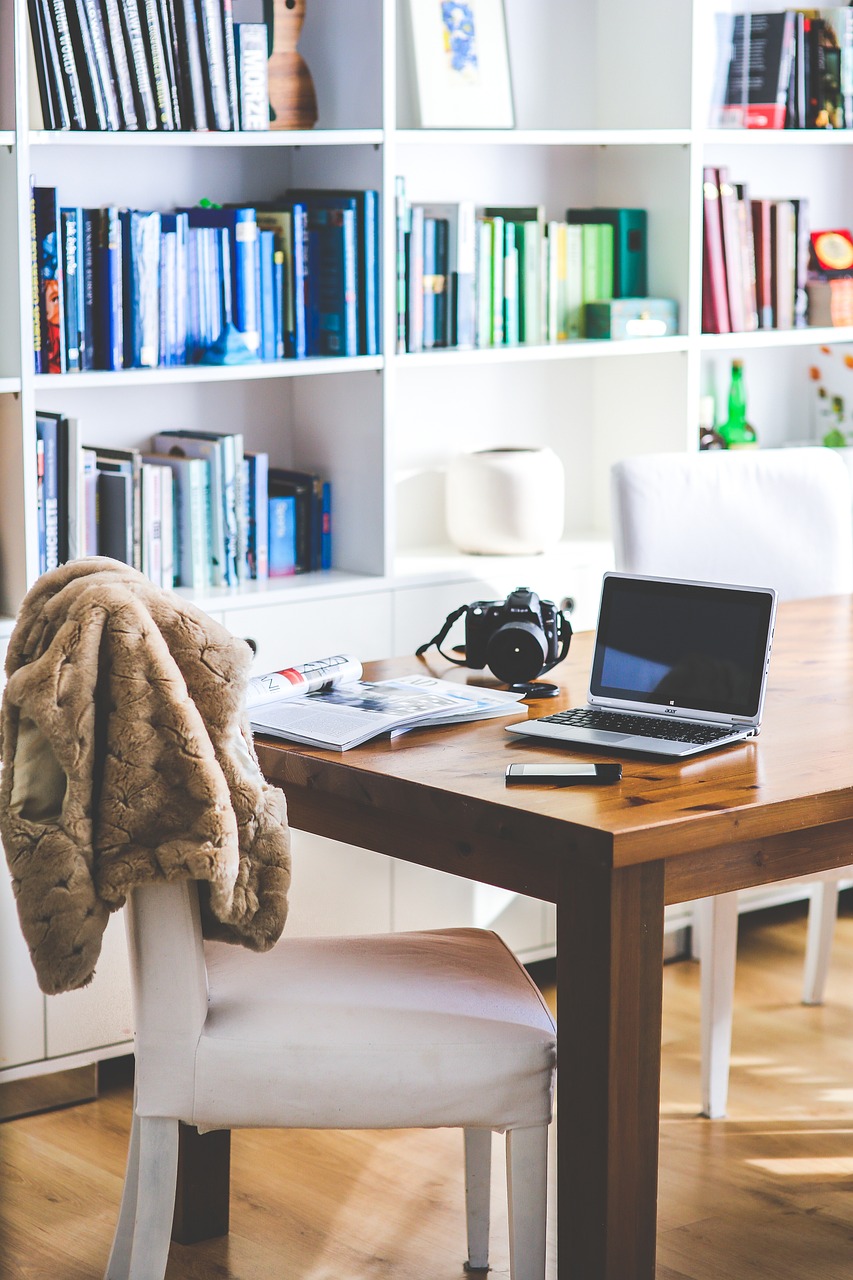
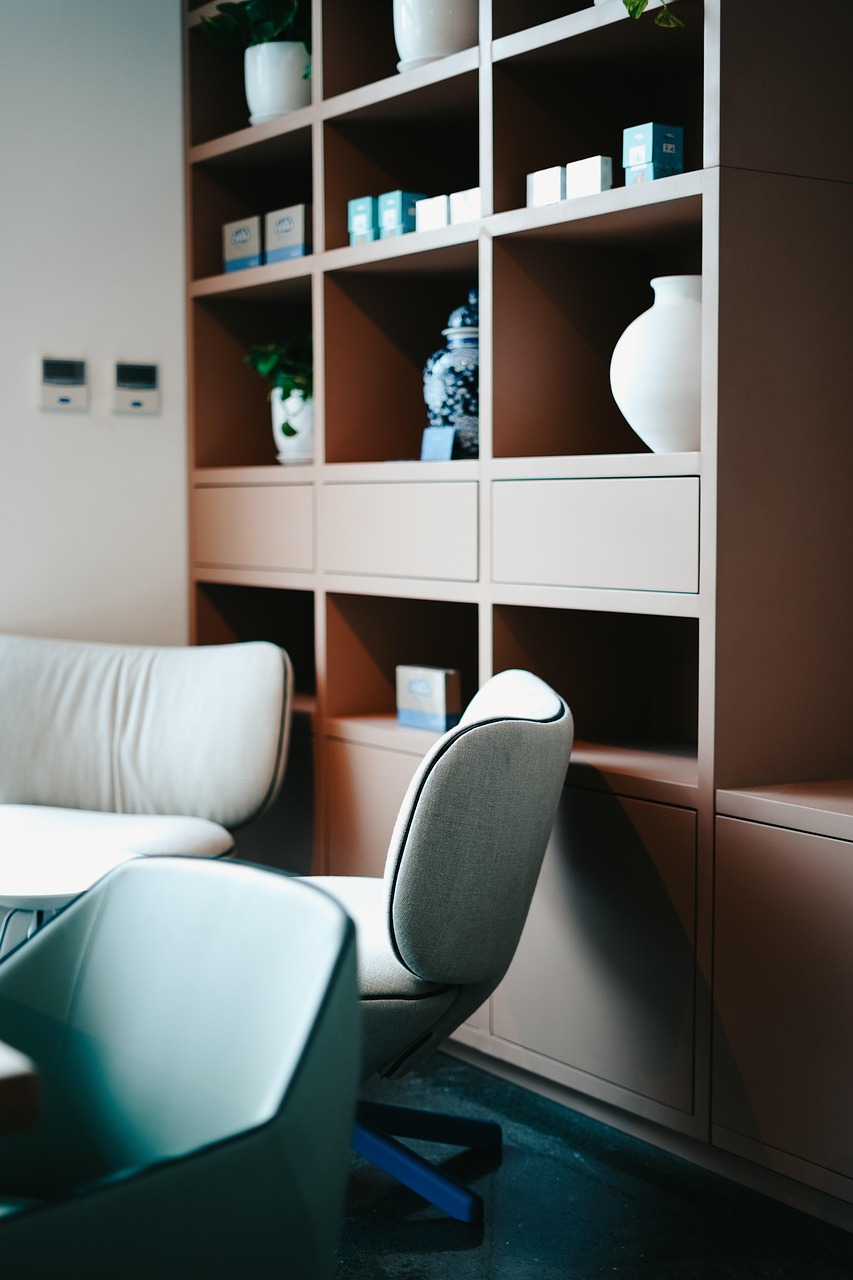
Printers, chargers, spare notebooks and stationery are not decorative, and leaving them out is what makes a home office feel cluttered rather than cozy. A closed cabinet, lidded boxes on a shelf, or a drawer unit under the desk keeps the visible surfaces calm while the working stuff stays within reach. Open shelving is for books and objects you actually want to look at.
7. Build upward with shelving above the desk
In a small room, the wall above the desk is the most valuable unused space you have. Two floating shelves give you room for books, a plant and a couple of framed prints without taking a single square inch of floor. Keep the lowest shelf high enough that you are not knocking your head when you lean forward — around 20 inches above the desktop is comfortable.
8. Add soft texture in at least two places
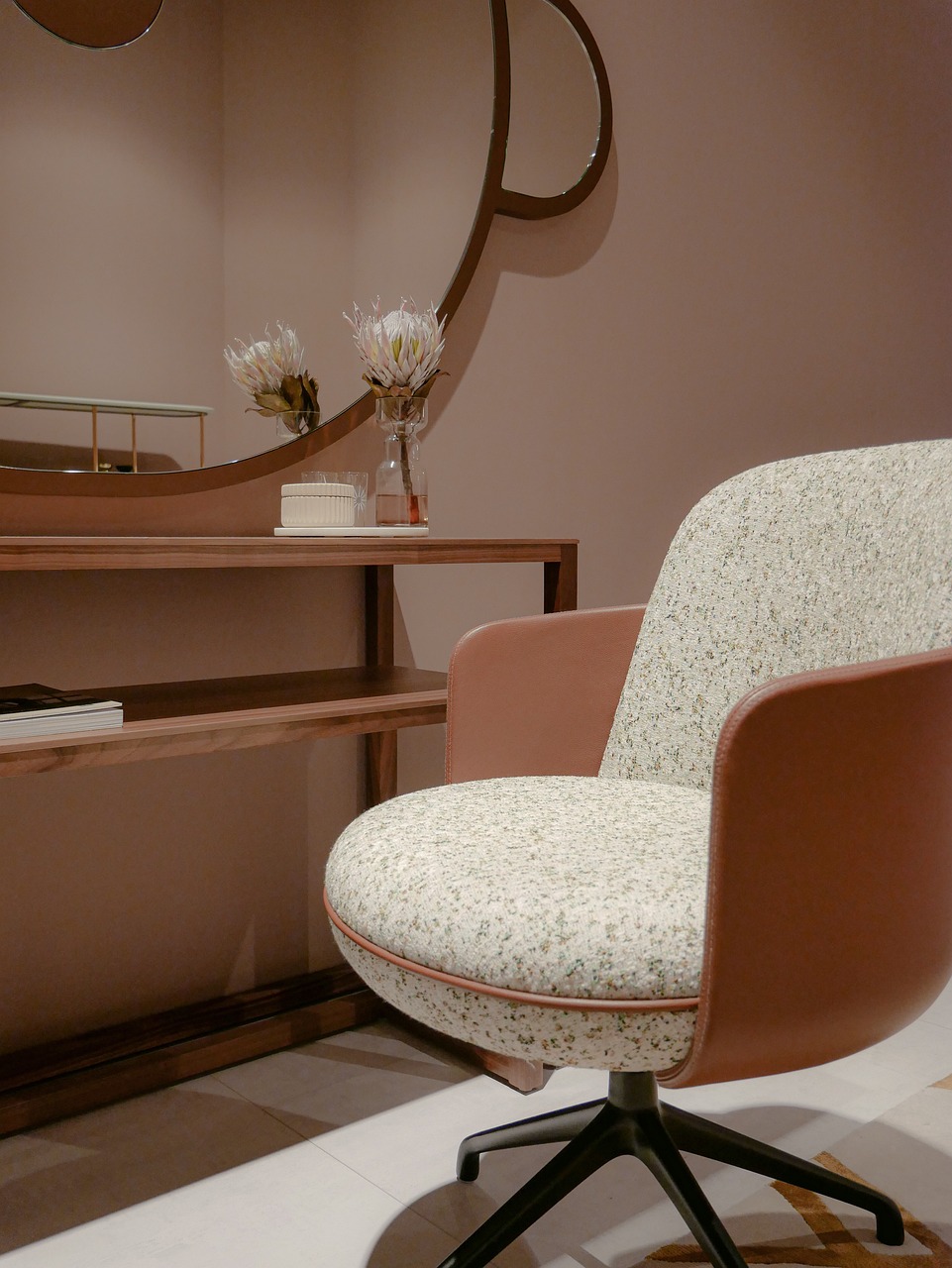
Cozy is largely a texture question. Offices default to hard surfaces — laminate, metal, glass, screen — so deliberately adding two or three soft things changes the feel of the room disproportionately. A cushion on the chair, curtains rather than a bare blind, a throw over a nearby armchair, a knitted basket. It also helps the acoustics.
9. Give yourself something to look at
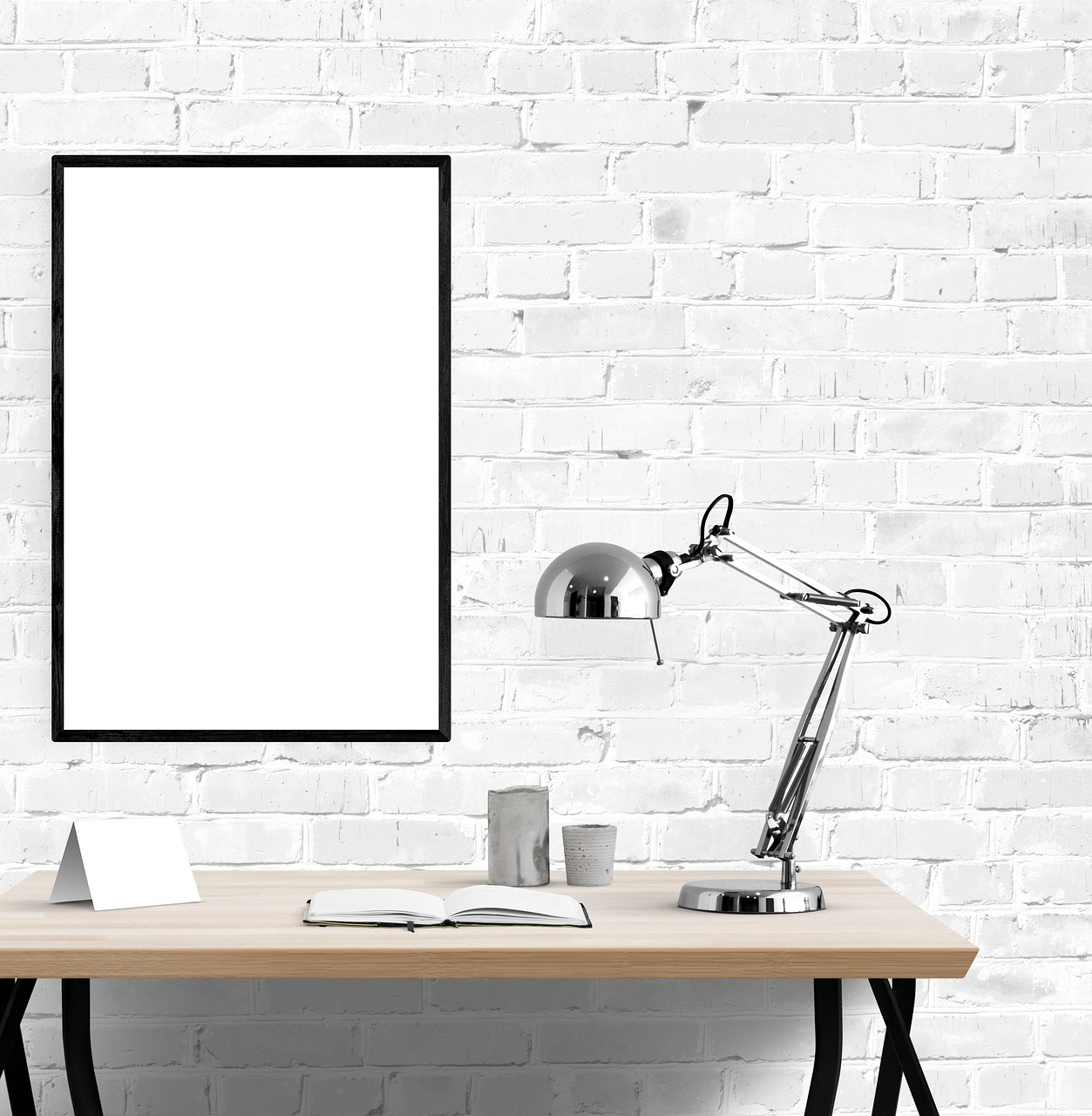
You will spend hours with your eyes six feet from this wall, so put something on it that you actively like — a large print, a small gallery wall, a pinboard, a mirror to bounce light around. Looking at a middle distance periodically is also genuinely good for your eyes, so a wall with some depth to it beats a blank one.
10. Mark the boundary if the office is in another room
A desk in the corner of a bedroom or living room needs some kind of edge, or work bleeds into the rest of your evening. A rug, a screen, an open shelving unit used as a divider, or even a different paint color on that one wall will do it. The psychological version matters too: if you can close a laptop and put it in a drawer at six, do that.
11. Bring in one or two plants
A plant on the desk and a larger one on the floor beside it soften the hard geometry of a workspace and give the room some life. Choose for the light you actually have rather than what you wish you had — a pothos or snake plant for a dim corner, something more demanding only if the desk is genuinely near a bright window.
Cozy versus focused: getting the balance right
| Element | For cozy | For focus | Do both by |
|---|---|---|---|
| Lighting | Warm, low, layered | Bright, even, on the task | Warm ambient plus one brighter task lamp |
| Textiles | More is better | Can absorb clutter | Soft chair and curtains, clear desk |
| Color | Deep, warm tones | Light and calm | Warm neutral walls, one deeper accent |
| Objects on display | Personal, layered | Minimal | Styled shelf, empty desktop |
Frequently asked questions
What is the best desk height?
Around 29 to 30 inches suits most adults of average height, which is why it is the standard. What matters more is the relationship between desk and chair: elbows at about 90 degrees, feet flat. If the desk is fixed and too high, raise the chair and add a footrest.
Can a home office go in a bedroom?
Yes, though it takes a little discipline. Position the desk so you cannot see the bed from your chair if possible, and make the workspace closable — a laptop that goes in a drawer, or a desk with a lid. The separation is what stops the room feeling like it is always slightly at work.
How do I make a home office quieter for calls?
Soft surfaces absorb sound, hard ones reflect it. A rug, full-length curtains, a bookcase full of books and an upholstered chair will noticeably reduce echo — often more than a single acoustic panel would. Bookshelves are genuinely effective because the uneven surface scatters sound.
What color should I paint a home office?
Warm neutrals are the safest — they stay pleasant across a full day and photograph well on video calls. If you want something with more character, a deep muted green or a warm clay on one wall gives you depth without making the room dark to work in.
Where to start
Sort the chair height and the cables first. They take an afternoon between them, cost almost nothing, and they are the two things that determine whether you will actually want to sit at this desk once the novelty of styling it has worn off.
More in Home Office, or see how the same layering ideas work in our butter yellow living room ideas and entryway ideas.